
Landing currency for airline pilots: §121.439 and §61.57
Which recency rule actually keeps a Part 121 pilot legal on the line, how §61.57 differs, and how OOOIPilot tracks your rolling 90-day landing counts.
Last updated June 2, 2026
Airline pilots get told to watch their §61.57 currency, but on the line the governing rule is §121.439 - three takeoffs and landings in the type airplane within 90 days. §61.57 is what applies to the Part 91 flying you do on your days off. OOOIPilot tracks your rolling 90-day landing counts.
The rule you fly the line under: §121.439
- Three takeoffs and landings within the preceding 90 days, in the type airplane you are to serve in.
- A Level B or higher simulator counts, which is why a recurrent sim session restores it.
- Fall outside the window and you need supervised recurrency under §121.439(b), not a quick trip around the pattern.
The rule for your own flying: §61.57
- Day: three takeoffs and landings in the prior 90 days to carry passengers, in category and class.
- Night: three takeoffs and landings to a full stop, one hour after sunset to one hour before sunrise.
- This is what governs you under Part 91 on your days off. It is not what keeps you legal on the line.
Why the two get confused
Both are a rolling three-in-ninety, so they look identical at a glance. The difference is scope: §121.439 is per aircraft type and simulator-creditable, while §61.57 is per category and class and adds the night full-stop requirement.
What OOOIPilot tracks
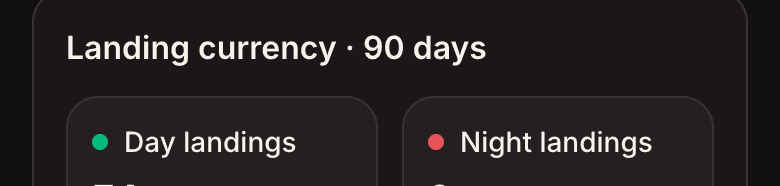
OOOIPilot knows your landings, night landings, and dates, so it shows rolling 90-day day and night landing counts on the dashboard and warns you before they lapse. It does not segment those counts by aircraft type, so treat it as your landing record rather than a §121.439 determination. This is informational - always confirm against the current regulation and your operator's rules.